Drain Cleaning vs. Sewer Line Repair: What Does Your Toronto Home Actually Need?

A clogged drain does not automatically mean your sewer pipe is damaged. At the same time, a blockage that keeps returning may not be solved by another routine cleaning.
The key difference is simple: drain cleaning removes material blocking a usable pipe, while sewer line repair fixes damage to the pipe itself.
Cleaning may be enough when buildup or another obstruction is restricting flow. Repair becomes more likely when the pipe itself is damaged, deteriorated, misaligned, or collapsed.
Some Toronto homes need only cleaning. Others need the line cleared first so it can be properly inspected, followed by repair if structural damage is found.
Drain Cleaning or Sewer Line Repair: Quick Comparison
Drain cleaning is more appropriate when the pipe remains structurally sound and material inside it is restricting wastewater flow.
Sewer line repair is more likely when the condition, shape, or alignment of the pipe itself is causing the problem.
| Situation | Drain Cleaning Is More Likely | Sewer Line Repair Is More Likely |
| One fixture is blocked | Yes | Rarely |
| Several drains are slow | Possible | Possible if damage is found |
| First isolated blockage | Usually considered first | Only with structural evidence |
| Clog returns after cleaning | Further cleaning may help | More likely if damage is present |
| Grease or sludge is visible | Hydro jetting may help | Usually unnecessary |
| Tree roots are present | Root cutting may restore flow | Repair may close the entry point |
| Crack or severe offset is visible | Cannot correct the defect | Usually required |
| Pipe is collapsed | Cannot restore the pipe | Replacement is usually required |
| Pipe has incorrect slope | May provide temporary relief | Excavation may be needed |
The right service should match the cause, not just the visible symptom.
Is the Problem in One Drain or the Main Sewer Line?
The number and location of affected fixtures can help narrow down the problem.
One Fixture Is Affected
If one sink, bathtub, shower, or toilet is blocked while the rest of the plumbing works normally, the problem is often in the fixture trap or nearby branch drain.
Hair, grease, soap residue, food debris, or a small object may be responsible.
More likely: drain cleaning.
Repair may be considered: when inspection reveals damage to the branch pipe rather than a removable blockage.
Several Fixtures Are Affected
A main drain or sewer line problem becomes more likely when several fixtures drain slowly or react to one another.
For example:
- A toilet bubbles when a sink drains.
- Water rises in a shower when the washing machine empties.
- Several fixtures become slow at the same time.
Cleaning is more likely: when grease, waste, roots, or buildup obstruct a usable main line.
Repair is more likely: when a crack, collapse, pipe belly, or major offset repeatedly restricts flow.
Several affected fixtures do not prove that the sewer pipe is damaged. They indicate that the problem is farther downstream and should be investigated.
Wastewater Rises Through a Basement Floor Drain
A basement floor drain is often one of the lowest openings in the plumbing system. If the main line cannot carry wastewater away, sewage may appear there first.
Stop unnecessary water use while wastewater is rising.
Cleaning may solve the problem if a removable main sewer blockage caused the backup. Repair may be needed if the blockage is connected to structural damage, poor alignment, or partial collapse.
The Same Clog Keeps Returning
A recurring clog deserves further investigation rather than automatically repeating the same service.
The main question is whether new removable buildup keeps forming or whether a defect in the pipe is causing the blockage to return.
When Is Drain Cleaning Enough?
Drain cleaning is generally the better choice when material inside the line is restricting flow but the pipe itself remains usable.
Cleaning may be sufficient when:
- The blockage is new or isolated.
- Camera footage shows removable buildup.
- There are no major cracks, holes, offsets, or collapsed areas.
- Normal flow returns after cleaning.
- The problem does not quickly return.
The cleaning method depends on what is causing the obstruction.
| Cleaning Method | Best For | Cannot Fix |
| Drain snaking | Localized clogs | Structural damage |
| Hydro jetting | Grease, sludge, and buildup | Cracks or collapse |
| Drain descaling | Scale inside usable cast iron | Severe pipe deterioration |
| Root cutting | Roots obstructing the line | The root entry point |
A final flow test or camera inspection can help confirm whether cleaning solved the problem.
When Does a Drain Problem Require Sewer Line Repair?
The balance shifts toward repair when cleaning can remove the obstruction but cannot correct the condition causing it.
1. Tree Roots
Cleaning can remove roots and restore flow. Repair may be needed when roots repeatedly enter through a crack, separated joint, or damaged section.
A single root intrusion does not automatically mean the whole sewer line needs replacement. The extent of the damage matters.
2. Cast-Iron Corrosion
Descaling may improve flow when buildup is the main issue and the remaining pipe wall is still usable. Repair becomes more likely when corrosion has created holes, significant wall loss, or structural weakness.
3. Sewer Belly
Cleaning can remove waste collected in a low section of pipe, but it cannot correct the slope.
If standing water remains after the line is properly cleared, a belly or grading problem may be responsible. A severe belly that repeatedly causes backups may require excavation and realignment.
4. Offset Pipe Joint
Cleaning may remove debris caught at a displaced joint. If the offset significantly restricts the opening or keeps trapping waste, the affected section may need repair.
5. Cracked or Collapsed Pipe
Cleaning may remove material around a damaged section, but it cannot restore a crushed or broken pipe. A complete collapse requires structural repair or replacement.
How Does a Sewer Camera Choose Between Cleaning and Repair?
A sewer camera inspection helps answer three important questions:
- What is preventing normal flow?
- Is the pipe structurally usable?
- Which service addresses the confirmed problem?
| Camera Finding | Likely Recommendation |
| Hair, paper, grease, or sludge | Drain cleaning |
| Heavy pipe-wall buildup | Hydro jetting or descaling |
| Roots with limited visible damage | Root removal and monitoring |
| Roots entering through cracks | Cleaning followed by repair |
| Localized crack | Spot repair or pipe lining |
| Severe corrosion | Lining or replacement, depending on condition |
| Major pipe offset | Sectional repair |
| Partial or complete collapse | Replacement |
| Incorrect slope or severe belly | Excavation and realignment |
What Should the Homeowner Ask to See?
Before approving major sewer work, ask:
- What does the camera footage show?
- Where is the blockage or defect located?
- How much of the line was inspected?
- Is the problem an obstruction, structural damage, or both?
- Why is the recommended method appropriate?
Roots, grease, scale, and standing water can hide parts of the pipe. In some situations, cleaning should be completed before the plumber makes a final structural assessment.
A second opinion may be reasonable when extensive work is recommended but the camera findings or explanation are unclear.
When Repeated Drain Cleaning Stops Making Sense
A returning clog does not automatically mean the sewer needs repair. The previous obstruction may not have been completely removed, or new buildup may have formed.
Further diagnosis becomes more important when the same section repeatedly clogs, roots continue to return, or cleaning restores flow only temporarily.
The key question is whether the pipe keeps becoming blocked or whether the condition of the pipe keeps creating the blockage.
If Repair Is Necessary, Does the Whole Sewer Need Replacement?
Not necessarily.
A localized defect may be suitable for sectional repair, while some cracked or deteriorated sewer lines can be rehabilitated with pipe lining. More extensive deterioration may require pipe bursting.
Traditional excavation may be necessary when the pipe has collapsed, its slope must be corrected, sections are severely displaced, or trenchless repair is not suitable.
The repair method should match the specific defect rather than automatically replacing the entire sewer line.

Available 24/7 for
Emergency Services
No Time is the Wrong Time.

Upfront
Pricing
No Hidden Costs When The Job Is Finished.

5 Star
Customer Service
We Treat Your Home like We Treat Our Home.
Which Costs More: Drain Cleaning or Sewer Line Repair?
Drain cleaning generally costs less because it removes a blockage or buildup without changing the structure of the pipe. The work is usually faster and causes less disruption when the line itself is still in good condition.
Sewer line repair is typically more expensive because it addresses physical damage to the pipe. Depending on the problem, the work may involve specialized equipment, access points, excavation, or property restoration.
In practical terms:
- Drain cleaning is usually the better value when the pipe is structurally sound and only needs an obstruction removed.
- Sewer line repair is the better investment when structural damage has been confirmed and cleaning would provide only temporary relief.
- Repeated cleaning can become costly when an unresolved pipe defect keeps causing new blockages.
The goal is to choose the least invasive option that solves the confirmed cause of the problem.
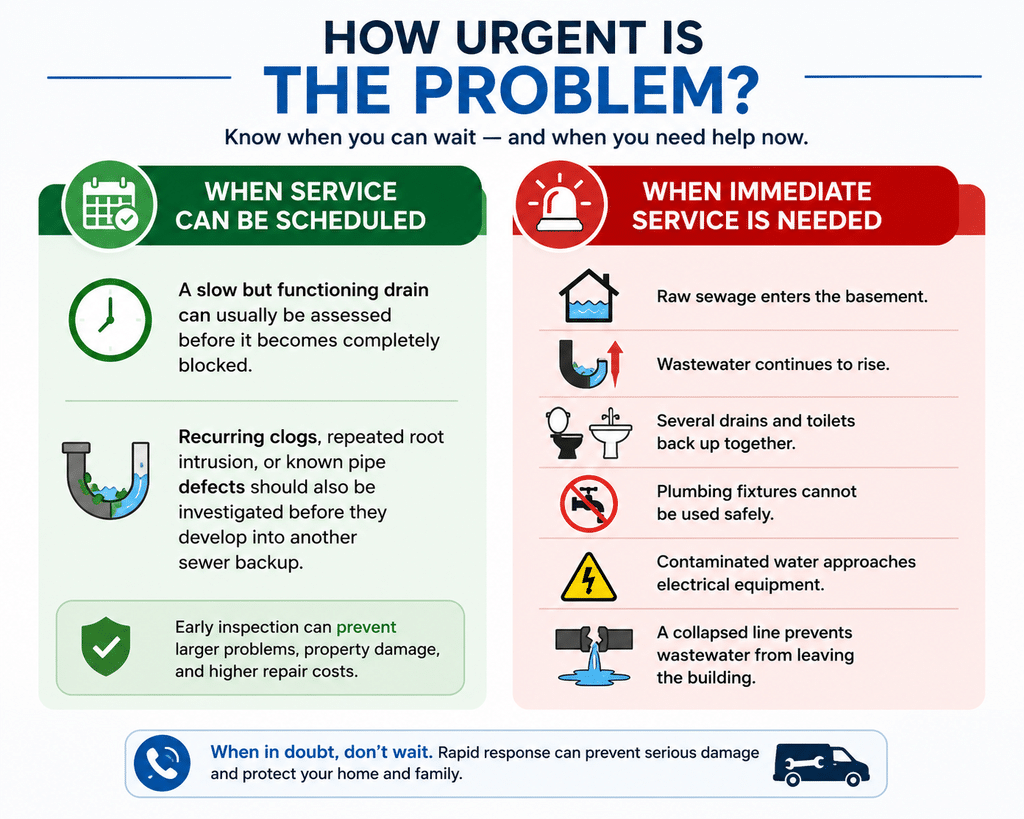
How Urgent Is the Problem?
When Service Can Be Scheduled
A slow but functioning drain can usually be assessed before it becomes completely blocked.
Recurring clogs, repeated root intrusion, or known pipe defects should also be investigated before they develop into another sewer backup.
When Immediate Service Is Needed
Call for emergency plumbing help when:
- Raw sewage enters the basement.
- Wastewater continues to rise.
- Several drains and toilets back up together.
- Plumbing fixtures cannot be used safely.
- Contaminated water approaches electrical equipment.
- A collapsed line prevents wastewater from leaving the building.
Toronto Sewer Backup: Call 311 or a Plumber?
Report a blocked sewer service line or basement backup to Toronto 311. Toronto Water can investigate whether municipal infrastructure or the City-side portion of the service line is involved.
A licensed plumber can inspect the property’s internal drainage system and private sewer lateral.
Consider contacting 311 when:
- Several nearby properties are affected.
- The backup occurred during heavy rainfall.
- The problem may be near the property line.
- You need an official record of the incident.
Keep photographs, invoices, camera footage, and written findings for insurance or repair planning.
Drain Cleaning or Sewer Line Repair: Final Decision Guide
You Probably Need Drain Cleaning If…
- The blockage is new or isolated.
- The pipe is structurally sound.
- Inspection shows removable material.
- Normal flow remains after cleaning.
You May Need Sewer Line Repair If…
- Camera footage confirms structural damage.
- Roots repeatedly enter through damaged joints.
- A severe offset, belly, or poor slope interferes with drainage.
- Part of the sewer line has collapsed.
You May Need Both If…
Cleaning and repair are not always competing services. The line may first need to be cleared so it can be fully inspected or prepared for repair.
Cleaning addresses the immediate obstruction, while repair addresses the defect responsible for the recurring problem.
Drain Cleaning and Sewer Repair Service Areas in Toronto and the GTA
Dr. Pipe Drain and Plumbing serves Toronto and surrounding communities, including North York, Scarborough, Etobicoke, East York, Downtown Toronto, Midtown Toronto, York, Mississauga, Vaughan, Richmond Hill, Markham, Thornhill, Brampton, Pickering, Ajax, and nearby communities.
Need plumbing help outside these areas? Call to confirm service availability.
Get the Right Diagnosis Before Choosing a Service
Do not keep paying to clear the same unexplained blockage. At the same time, do not approve major sewer repair until you understand what the inspection shows and why structural work is required.
Dr. Pipe Drain and Plumbing can inspect the line, identify the cause of the problem, and explain whether your Toronto property needs cleaning, repair, or both.
Call +1 (416) 663-4777 or complete the online form to request a free upfront estimate.
Frequently Asked Questions
How Do I Know If I Need Drain Cleaning or Sewer Line Repair?
Drain cleaning is usually appropriate when removable material is blocking a structurally sound pipe. Sewer repair is more likely when structural damage or alignment problems prevent the line from draining properly.
Does a Recurring Clog Mean the Sewer Pipe Is Damaged?
Not always. Repeated clogs may come from buildup or incomplete cleaning, but they can also point to an underlying pipe problem. A camera inspection helps identify the cause.
Can Hydro Jetting Prevent Sewer Line Repair?
Hydro jetting may eliminate the need for repair when buildup is the only problem and the pipe remains structurally sound. It cannot repair cracks, collapse, major offsets, or incorrect slope.
Should a Sewer Line Be Cleaned Before a Camera Inspection?
Sometimes. An initial inspection may locate the blockage, but heavy buildup or a complete obstruction can prevent a full assessment. Cleaning followed by another camera pass may provide a clearer view of the pipe.
Does a Sewer Belly Always Require Repair?
No. A minor depression may be monitored if it does not interfere with drainage. A severe belly that repeatedly collects wastewater and solids may require excavation because cleaning cannot correct the pipe’s slope.
Should I Get a Second Opinion Before Replacing a Sewer Line?
A second opinion is reasonable when the project is extensive, camera findings are unclear, or the proposed repair is not clearly connected to visible structural damage.